Showing posts with label foreign. Show all posts

Sunday, January 20, 2013

Blue River and Roaring Waterfall

We have come now to a post that I have been dreaming of and dreading since I first got the idea for this blog. While I treasure nearly every experience I had in Japan, there are a few that rank in my absolute favorites, and the first AIU bus trip is one of them. I have been excited to tell everyone about the beautiful places I visited, but also worried about accurately portraying how amazing it all was. I cannot delay the plunge forever, though, so here it goes.

AIU does something that I wish every university, college, and high school did: they organized field trips. Who doesn’t love a good field trip? Why don’t teachers do this more often? Because AIU was so invested in the international experience, part of our tuition money went towards bus trips during which the school took you to various tourist locations in Akita prefecture. Unfortunately for us, these outings, which were usually numerous, had either been cancelled or squished down to a meager two trips. This was due to fear of the frequent aftershocks from the big earthquake. Still, each trip was filled to the brim with fun, and although they were much too short, I was grateful to be on them at all.

The first trip consisted of three parts. The first of those parts was a visit to a Shinto shrine near a staggeringly beautiful river fed by a roaring waterfall. This excursion was the first thing I had really “seen” in Japan, and it left me with a sublime feeling I have yet to encounter since. The day was starting out perfect, with the first sunny, blue sky since we had landed. When the bus pulled up, we were all let out and set free to roam and explore. Before us lay a stretch of grasses, leading up to a mostly obscured river between two wooded hills, crossed by a bright red suspension bridge. Although the landscape was touched here and there with splashes of bright green, over all the colors were muted browns and pine greens, for it was still early spring. Northern Japan, like Colorado, wakes from winter slowly. Most people headed for the most noticeable landmark, an island-like precipice rising from the bank, topped by a few trees and a shrine marker. Justin and I made our way to the main shrine, into the pine trees toward a trail that wound up the side of the hills.


As we crept through the torii, or the gate of the shrine, a feeling of blissful calm settled over us. Justin and I said little, content to soak in the warmth of the sunlight, and watch as the rays burst through the trees to dapple the ground. Many people went up to the shrine bell to ring it and perform the claps and prayers of Shinto tradition. I wanted to, but we hesitated. We were unsure of whether we should partake for the sake of the experience, or hold back because neither of us actually believed in the Shinto religion. Out of respect, we chose instead to wash our hands with the basin provided, admire the bell, but move on.


(The little basin where you wash your hands and rinse your mouth to purify yourself.)
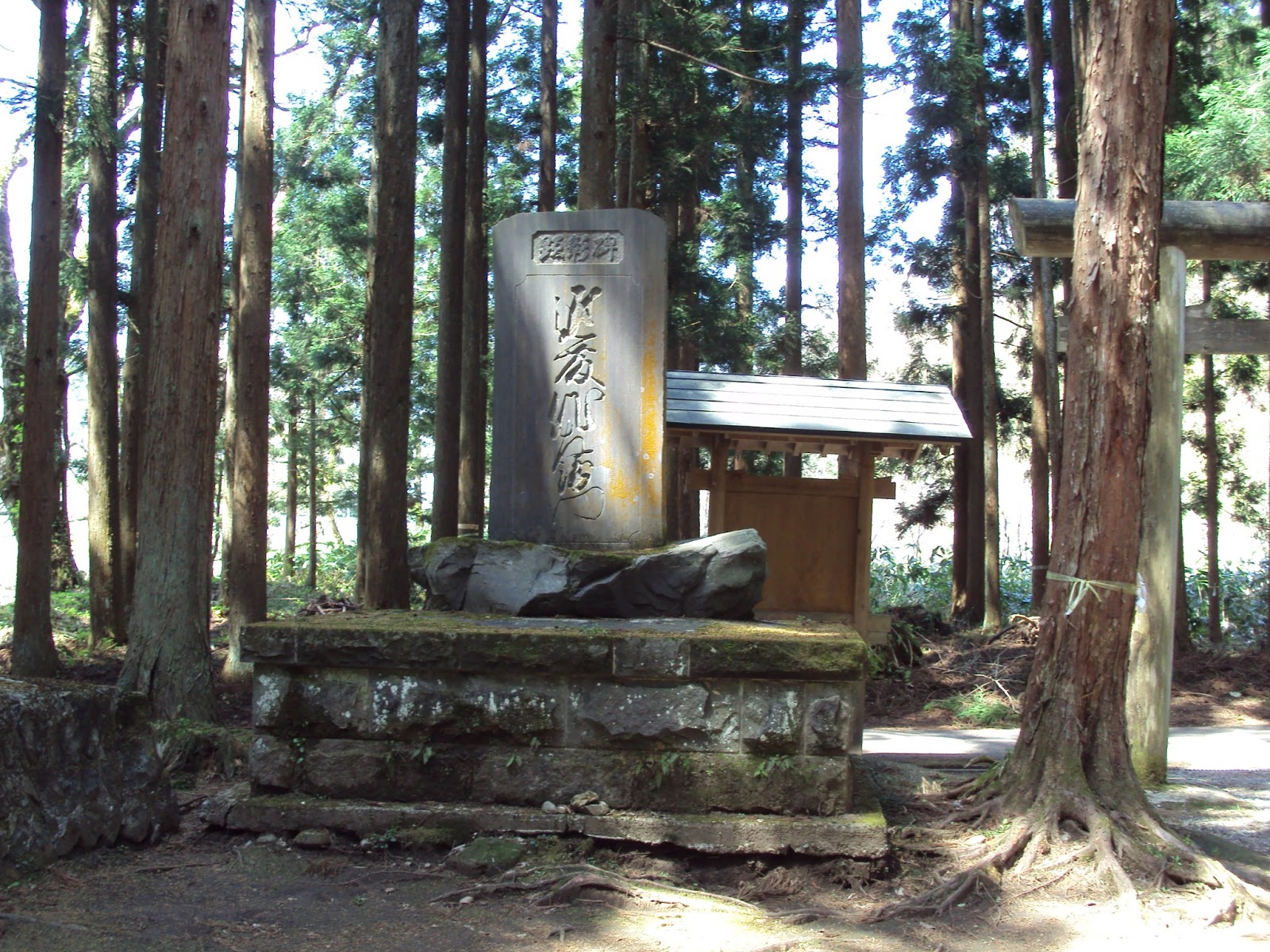


(A signpost at the shrine).


The path along the hills was actually quite green. Below us, we could finally see the river clearly, and I was startled by its beautiful and rich blue color. At times deep cobalt, at others bright aquamarine, I wondered at the mineral in the water that must turn it such a perfect shade. Understandably, I took many pictures, and some of my best work was found on this walk.

(The beautiful blue of the water. I wonder what makes it so blue, and so milky.)


The path was just as beautiful as the water. Every bend seemed to offer up a new gem of natural beauty. At one turn there was a small cave surrounded by new spring leaves. Justin and I crossed the suspension bridge, delighting in the bounce it gave to our steps. On the other side, there was a natural bowl-like groove in the stone that had filled with water, and someone had put a ladle there for drinking. The water was cold and clean and pure in taste. A cacophony of rapids sang below us. New tree leaves hovered silently in the golden air like sprites. Little springs trickled down the sides, teasing at the great spectacle waiting for us at the end.

(The little cave along the pathway.)


(Turquoise rapids.)

(A little spring falling down the mountain side, bathed in a column of light.)

For the most part, we had meandered down the path at our leisure, but then suddenly people were running past us in the opposite direction. Finally, someone paused to inform us that it was time to go, but that there was an awesome waterfall up ahead. “If you run, you can make it.” Not caring for the odd looks from other visitors, we instantly broke into a run, praying we would find this waterfall before we were dragged back. We made it. Although we were out of breath, it was so worth it.

(Roar, baby, roar!)


The photo above does not communicate how big and grand the waterfall was. Its powerful waters broke against the rocks and threw a cool spray over its spectators. Surely this lord of water was the inspiration for the shrine. Its proud turbulence belied the peaceful ascent we had taken to reach it. Thoroughly pleased, we turned back to that tranquil path, before boarding the bus once again, ready for the next stretch of our trip.

It may seem strange that such an uneventful experience could be among my most favorite memories of Japan. After all, we didn’t really do much at this river. But the scene was so picturesque, the shrine was so peaceful, and the waterfall was so amazing, that it has come to embody the essential beauty of Japan in my heart. Although I do not practice Shinto, I can understand why one would find such a perfect place worth worshiping. 

Monday, July 9, 2012

Cicada Songs: The Perfect Accompaniment to the Summer Heat


Coming from a small town in the mountains of Colorado, I am no stranger to encountering wildlife on a regular basis. I am familiar with the faces, behavior, and vehicular dangers of deer, elk, mountain goats, big horn sheep, and even moose. I have heard the calls of red-tailed hawks, coyotes, owls, and cougars. Bald eagles nest in trees by my parents' house, while a fox family lives in the nearby hill. I've even seen a mother black bear and her cubs from the comfortable safety of my vehicle parked at a distance. Despite all this interaction with the wild, the animal life in Akita was a completely new experience to me. While I didn't wake up to herd of dear on the front lawn, I felt more surrounded by wildlife than I had in a long while. (Perhaps I've grown soft in my years of living in Boulder.) Sometimes this closeness was nice and refreshing; other times, it left my skin crawling. Sometimes, I didn't even see the animals, and yet they were a strong presence in my life nonetheless.

The difference between the nature of Colorado and that of Akita is based on the humidity. Akita is so much wetter than Colorado, so the plants and flowers thrive in a way they never could in Colorado—and so do the bugs.

Oh my gosh, the bugs. Colorado does not have bugs; not compared to Akita. The sheer number of them left me speechless and hallucinating crawling sensations on my skin while I tried to sleep. The spiders were the worst. During the day they'd go off to hide in some cool hidden nooks, thankfully out of my sight, but at night they came home like commuters rushing from cubicle jobs. They hung over every single entry way, dangling lightly, making most doors impassable. I had to rush under them, squealing like a child, for fear of them dropping onto my hair. When I was walking through the streets at night, or through the forest during the day (I didn't go at night), I would find the webs of the rumored giant spiders that I, thankfully, never actually encountered. I am so grateful, because those webs were huge. Giant. Enormous. They spanned at least three feet wide, often more. I cannot even imagine a spider big enough to make them.

And it wasn't just the spiders that were big. There were beetles as long as fingers and twice as thick. The dragonflies, fed fat on the numerous mosquitoes, sounded like lawnmowers when they flew by my ears. Justin (my boyfriend) even saw a caterpillar a foot long and almost two inches thick, scooting along the sidewalk. Can you imagine the size of the butterfly or moth THAT thing became?

There was a stairwell near my dorm that once served me as a convenient quick route back to my room, instead of going all the way around. That convenience ended around July, when the bugs deemed that staircase the perfect place to go when their lives were ending. So many dead beetles found those stairs as their final resting place. I once stepped on one by mistake on my way to class. It made a large crunch, and when I looked, I expected to see the bug in shatters. Instead, its exterior skeleton sprung back into place, and it looked almost alive. Gross.

It wasn't all disgusting, however. The dragonflies in Akita are beautiful, brilliant colors. From a safe distance, even the spiders are kind of cool. Check out the picture below of a spider I found with a leaf for a house. 


During the height of the summer, the cicadas invaded the lands, filling the air with their constant buzz. I never could find one in the trees to take a picture of, in spite of their incomprehensible numbers. At night, when they stopped humming, the world seemed eerily silent, like an empty apartment after a night standing next to the speakers at a loud party. The spiders had the added bonus of providing me with entertainment while I ate lunch. Looking out the cafeteria windows, I could see them in the corners of the window panes outside, and so could the birds. It was fascinating watching the sparrows dart in and out, expertly taking away an tasty arachnid in their beaks.

Akita also had frogs, whose songs replaced that of the cicadas at night. Justin and I heard their calls everywhere when we walked through the forest near campus, and yet we could never find them. The only one I managed to actually see was one sitting on a leaf near a Buddhist shrine, silent and motionless like a monk himself. When I showed the picture I took to my roommate, she made a disgusted face; I was disappointed. Apparently people in Japan don't find frogs as cute as people in the States. (He was adorable.)


The most constant animal figure during my stay was the local bear. Every week there was a new bear warning, usually saying that the bear had been seen near the convenience store down the block. There were even signs around that said “Caution Bears.” This made the native English speakers laugh, (since it should have said “Caution, Bears”) and we imagined the bear wearing a bright orange vest while warning passers-by of the various dangers of AIU. The bear was supposedly an Asian Black-Bear which I have heard are more aggressive than Grizzlies and frequently attack humans. Still, there were no attacks that semester, and so the bear remained merely a scary rumor in our daily lives, and a reason to be noisy when walking in the forest—so as not to sneak up on it by mistake.
(Picture from wikipedia. So cute and yet so scary.)

Another friendlier, more welcome animal presence in Akita were the numerous cats. There are a huge number of stray cats in Japan, perhaps because of all the seafood. They tend to gather in large groups wherever there are enough people to pamper them, and the AIU campus was one such hotspot. Each cat we encountered was sweet and docile, accepting our coddling with almost princely satisfaction. I often passed laundry hours by spoiling the nearby cats, or watching them have small territorial disputes. On paper, AIU had to periodically get rid of the cats—in the worst sense of the phrase—but the lady in charge of the distasteful duty always made as much noise as possible when she was supposed to round them up. With such ample notice, the cats usually made an easy get away, going on to live another day fed by bleeding heart students who left out cans of food bought from the convenience store.

My trip was filled with cameos of other animals in addition to the usual cast. Koi fish often followed my feet as I walked, begging for crumbs. I watched seabirds and hawks dance on the wind at Cape Nyudo on the Oga Peninsula. Every once in a while I'd spot a rabbit flitting across the grass at AIU. In many ways the change in animal life made me yearn for the familiar blue spruce pines of the Colorado woods; and yet many of the creatures I encountered made my visit to Japan especially satisfying because I had anticipated seeing them. Almost every anime I have watched includes a summer scene filled with the buzzing of cicadas. Koi fish are as iconic of Japan as girls in kimono or cherry blossoms. Even the stray cats are a famous characteristic of the island nation, appearing in such beloved pieces as the movie The Cat Returns, and the darling show Azumanga Daioh. Although I can't say I miss the abundance of bug life, the wildlife reminded me of how lush the nature of Akita is, and how lucky I was to experience its beauty. 

(This cat was not so happy to see us. In fact, it was really pissed that we interrupted its nap.)

(A hunting hawk at Cape Nyudo. This picture doesn't communicate how big and beautiful and close they were, but it's the best picture I managed to capture!)

(A short video to let you hear the hum of the cicadas. Now imagine this from 10am until 6pm, constantly. You might have to turn up your volume, a bit.)

Thursday, June 28, 2012

Exploration: Abroad and at Home


The last few blog posts have been about very specific details of my trip abroad and about the culture surrounding them. Toilets and vending machines in Japan are awesome. I was there in time for the cherry blossoms, and they were amazing. I joined a nihon buyo club and had a great time learning a traditional dance. But some experiences of traveling cannot be condensed into single events or specific details. Some experiences are built up over many events, constructed from feelings and impressions. One such experience for me while I was in Japan was the experience of exploration.

In a new country, exploration occurs pretty much constantly. You are exploring the sidewalks you walk on, the people you encounter, the culture around you. Sometimes, you even go out and intentionally explore, taking the unusual path and getting lost on purpose, for the sake a wholly individualized experience. For me, exploring like this was so much fun. I could describe it with prettier words; it was exhilarating, inspirational, exciting. But really, the best phrase for it is just pure, unadulterated fun.

During the early part of my visit, I wandered away from the classrooms and dormitory on a rare occasion when it wasn't raining. It wasn't sunny, but the lack of rain was good enough for me. Taking along my camera, I drifted towards some unspecific direction, with really no purpose in mind except to look at whatever there was to see. Although I was familiar with the buildings in the center of campus, I had no idea what was behind them or what the mysterious section of woods off to the side contained. So I decided to just walk around. I kept my camera on to record what I saw and my random musings, for posterity's sake, or something like that. 


What I discovered was a street lined with cherry trees; a cute, little convenience store a short block away; a couple picturesque farm plots; a bike rental company; and a large, beautiful garden behind the campus. This garden contained a myriad of unfamiliar plants, trees, and flowers. I was fascinated by the lack of grass, which usually covers American garden-parks. Instead, there was soft, fragrant moss everywhere—even on the pathways. And then, I found a bridge.


(The magnificent bridge, surrounded by leafless trees of early spring.)

It's almost embarrassing how excited I was to find this bridge. It felt like I was walking through the wardrobe into Narnia or using the rope to cross the creek into Terabithia. I had no idea where it would take me, but it looked so mysterious. The thrill grew as I chanced upon sets of stairs leading in two directions. The first path led me to a house and another farm; turning back, the second one led into the heart of the woods near the campus. I discovered a series of raised wooden pathways over creeks that spindled out like capillaries. I noticed how remarkably different the pine trees were compared to my home in Colorado; tall and bare until close to the top where they flourished out in dark green, soft needles. I found a kind of bright green tree with delicate leaves that seemed to float in the air on barely noticeable, thin branches. A couple branches of some tree had wound around each other, forming a rope-like structure that looked man-made. Fiddle ferns grew on the ground, curled up so they appeared almost alien. Although it was not some raw, untouched forest, it felt entirely undiscovered and revolutionary to me. I was disappointed when I came out the other side, finding myself once again near the campus buildings.

(The stairs that went up.)


(The stairs that went down.)


Luckily, these exploration experiences peppered my entire stay in Japan. I followed an unknown path beyond a lighthouse during a school excursion to find myself standing a hundred feet over a beautiful, rocky coastline. Hawks and large sea-birds dove and surfed the winds around me. There, a nice couple offered to take my picture. Back at campus, I took an afternoon to explore to the books in the library, discovering illustrated books on Japanese folklore, an interesting book on the history of chemistry, and texts on traditional dances of obscure cultures. Thoroughly exploring shops at the mall exposed me to the nearly infinite variety of “cute” merchandise in Japan, delicious watermelon puree drink and, conversely, gross placenta drink, as well as super expensive taco ingredients (which were too pricey even for my desperate taco cravings).

(The beautiful, tempting path beyond the lighthouse. How could you not explore it?)


The results of my explorations were always interesting and rewarding, but the real pleasure came from the exploration itself. Simply giving myself over to curiosity and welcoming any result filled me with pure happiness and a cleansing sensation. My existence in those moments was not complicated. I had no preferences, but I was interested in everything. I had no goals, but I felt accomplished whenever I made a found something new. I think this basic level of curiosity rivaled that of an infant. The world was new and amazing to me, and even the smallest detail contained endless entertainment. I think it is the purest state of being; to explore the world, to observe the world, to delight in the world.

The experience was so impressive, that I think I have been chasing after it since I've returned, like searching for the sensation of a first high. Curiosity and exploration gets lost in the bustle of the every day. Responsibilities or even just weariness keep us from opening ourselves up to experiences that have no purpose; they stop us from indulging or perhaps even noticing our natural curiosity. In light of my experiences abroad, I am trying to change this in my life. It's not easy. I have classes and homework and regular work and chores just like everyone else. Not to mention, my boyfriend is currently less mobile due to a hip injury, and my desire to include him in my adventures often prevents me from having them at all. But I forget that curiosity doesn't always mean going out and finding some unknown path in the woods. It can mean turning on my computer and reading about some new fact, then following that interest and learning more. For example, I just finished reading an National Geographic article about the leading theory on how the statues of Easter Island were transported from miles away. I realized I really don't know anything about Easter Island. Instead of just letting my interest end with the article, later I'm going to do some reading about the island and learn more about the culture and its history. Following a curiosity, no matter whether its in concrete or digital form, is always stimulating; and for me, often has the added bonus of inspiring stories I can write.

There may be no point to indulging in curiosity. It doesn't always provide any rewards except perhaps as a conversation piece. It doesn't make money; it doesn't get anything done. However, I really believe curiosity is the most defining and basic characteristic of the human species. Humans love to learn, which is something we often forget when looking at education and homework, but it's true. We want to know things just for the sake of knowing them; because they're interesting, because they're fun. Perhaps that is a goal and a reward enough in itself. So go out and explore, even if it's just from your couch. 

(The sakura lined street near campus.)


(The mossy pathways and bright green trees of the garden-park.)


(The awesome twisted wood in the forest.)


(Floating leaves.)


(A bad, blurry pic of the fiddle ferns that look like they're from Star Trek.)

Below are some of the videos I took while exploring. I swear I'm not as ditzy as I think I sound. I apologize for the awful quality. :) Also my camera has a time limit on videos, so some of them start/cut abruptly. Again, sorry.


The tree lined path. 


Exploring the garden, interrupted by a full memory.

Continuation of the exploration of the garden.


Discovering the bridge. 


Wandering up the stairs.


Monday, June 4, 2012

Nihon Buyo


My love for Japan is based mainly in the traditional aspects of its culture, which survive alongside the hyper-modern, technology dictated lifestyle of the average person. Japanese people, especially the young, have a fading interest in such traditions, and many fascinating older aspects of the culture are only kept alive through tourism and the sometimes fanatic interests of foreigners. At my school, the Japanese culture department was taught by one charmingly neurotic British guy. Even I had to do a bit of teaching myself, when many of Japanese friends didn’t know how to don a yukata (summer kimono). Luckily, a few Japanese people still continue the old fashions, such as the instructor for the nihon buyo club. In fact, nihon buyo is one tradition that is experiencing a resurgence in the Japanese population, with people taking classes for entertainment as well as health reasons.

Nihon buyo, which translates as Japanese traditional dance, is a gorgeous art form, the many faces of which have captivated my curiosity since I was young. Dating back to the Heian period (794-1192), it has changed over time and influenced or drawn influence from several other forms of dance. Many types of dance were originally designed for daily use, particularly Shinto rituals. Although many of the traditional dances people watch today are performed as both stage art and ritual, such as dances by shrine maidens, or only stage art, such as noh, nihon buyo is one of the only forms designed for the stage from the beginning. It draws elements from various other forms of dance, such as bugaku (a form of dance performed for the Imperial court), nohgaku (from noh theater), as well as a variety of folk dances that vary based on locality. Elements of nihon buyo are incorporated into kabuki buyo (dances for kabuki plays) as well as other, traditionally inspired free form dancing.
(Source: http://www.nihonbuyou.or.jp/english/about/index.html)

This kind of dancing is designed to be performed in small spaces, and thus includes small, precise, and measured movements. The use of props, such as fans or poles, is common to help accent and dramatize the moves—the long sleeves and bright coloring of the kimono or yukata also help. The dances are choreographed so that each step flows easily in the next one. Whatever position one’s foot is in, the next position can be easily reached, and the arm movements will echo the movement of the feet. There are often subtle moves that are made in preparation for future steps, such as discreetly placing one’s foot behind the other in anticipation of a fluid turn. There are also independent movements of the hands and neck, and ideally the dance should be performed with a look of placid thoughtfulness on the face. Overall, this form of dance is very refined and delicate, and for some people it may be boring. However, for those with a longer, more observational attention span, it is a beautiful form of art, full of expression in every movement of the body.

Being a fan of most traditional Japanese culture, particularly dancing, this is the first club at Akita International University that I joined. Any other club came second to it, and luckily a lot of my friends joined as well. Including my roommate, I also had friends in the club from Taiwan, Malaysia, Hungary, and the Netherlands, which made getting over any embarrassment easier. The senpai* (senior members) of the club were all very nice and helpful, and the sensei (teachers), while sometimes relentless in their practices, were easily approachable when you needed a particular step explained. I only wish we could have met more frequently, as we only met once a week. Although I was only able to perform once, the experience was one of my favorites in Japan.


The club was split into several groups; one was for the new students, two other groups containing senpai performed more advanced dances, and then our single male member, who was new as well, performed his own dance. The above picture is of my group, ready for our performance, around the one guy. The new students worked on a dance accompanied by a folk song that every Japanese person grows up knowing: Sakura Sakura. It is a song that beginners on instruments play and that little kids learn to sing for concerts. Musicians often rework the melody to try to modernize the song, keeping its place firmly rooted in the culture.
Here is a recording of the song.


Here is a translation of the lyrics:
Cherry blossoms, cherry blossoms,
Across the spring sky, as far as you can see.
Is it a mist, or is it cloud? Fragrant in the air.
Come now, come, let’s look, at last.

As you can see, it is a short song, like many folk songs, with a simple melody and simple, poetic words. I wish our recording had been as lovely as this one, but for some reason our sensei insisted on using an outdated, poor quality tape recording. I even own such a tape myself now, courtesy of my sensei as a gift at the end of my trip. What am I going to play it in, since I don’t own a tape player? No idea, but it’s a nice keepsake regardless.

As beautiful and graceful as nihon buyo is, learning it is not so delicate. The moves were difficult and sometimes felt quite awkward to my foreigner’s feet. We had to bend our knees slightly in the traditional feminine style, which made my calves and knees hurt in the beginning weeks. This was always difficult for me, and my sensei was always reminding me to bend lower. (I think it’s because I was taller than the other girls.) Our first lesson didn’t involve explanations of each individual movement, but rather was a sink-or-swim plunge that involved watching the senpai perform it once, and then giving it a go ourselves until we figured it out. The fans require a special technique to open them, which made them unreliable at times, especially since our practice fans were worn out and tended to stick every once in a while.

Eventually, after extra practicing on my own with fellow members, we finally got the dance down and were ready to perform it at a student festival near the end of the semester. I invited my host family (who I will tell you about in a later post), and they said they were really impressed, describing our performance with complicated words that were definitely out of my vocabulary! I was sad to be done with the club, but I have many pieces of memorabilia that keep the experience fresh. I have pictures and recordings of our performance, as well as a tape recording, my tabi (Japanese socks), and a pretty dancing fan that I bought for myself in the Asakusa neighborhood of Tokyo. I can even remember the dance moves, a year later. Although I am far from achieving the grace of the dancers I admire so much, it is comforting to know that despite being a foreigner, I can still perform dances with origins dating back a thousand years, and not look like a complete idiot. If you ever travel to Japan, I highly suggest going to a performance or, if you can, maybe try a lesson or two. In the meantime, here are some videos of my club's performances! I apologize for the horrible video quality; it was filmed on my dinky camera by my boyfriend in a crowded room.

(I am in the front on the right.)

(My friend from the Netherlands doing his awesome one-man dance. The difference in style is pretty cool.)

(A few senpai performing a really lovely dance with streamer fans.)

(Here are some videos of girls performing nihon buyo at a festival I saw. They're much better than me, and  the youngest ones are so cute!)


*Many people who might be familiar with common Japanese words may have a problem with me writing "senpai" instead of "sempai." I also write "tenpura" instead of "tempura," and "kanpai" instead of "kampai." Why do I do this? Because it's the correct phonetic translation. The 'sen' in 'sensei' is the same character/pronunciation as the 'sen' in 'senpai.' There is no single 'm' sound in Japanese, but there is a 'n' sound, written like: ã‚“. It just sounds like an 'm' when next to a 'p' sound, but that doesn't reflect the transliteration properly. So, this is how it will be written in my blog, no matter what. 


Monday, May 28, 2012

Toilets and Munchies


In the United States there are a lot of little annoyances that we ignore; those insignificant problems that bug you in the moment, but later become an afterthought. There’s an attitude of “deal with it,” which is fine, because, really, no one should waste her time being upset about such trifling incidents. On the other hand, in Japan people go to the next level to erase any discomfort or inconvenience you might be feeling. Examples of extraordinary care and concern can be found in nearly every aspect of Japanese daily life, and just like the annoyances are forgotten in the U.S., sometimes I wonder if the conveniences are forgotten in Japan. Their usefulness and rarity were certainly not wasted on me, and there were some amenities that stood out in particular.

Let’s start with toilets. The Western-style toilets in Japan are awesome. The high tech ones come with a button pad mounted on the wall, allowing you an array of options to make your business as enjoyable as possible. There is a water spout option with adjustable angles, which helps wash away the mess from your private bits. It can follow up with a good warm air-drying, leaving you feeling cleaner than any meager piece of paper could accomplish. Some toilets include a button that plays the sound of running water to camouflage any…uh, unfortunate sounds that might happen. There was even a massage button, but when I pushed it nothing happened, so I’m not sure what is supposed to occur. (Does the toilet seat start pulsating or send rotating spheres along your buttocks like those massaging chairs? Or maybe it’s just an undulating, high pressure spout? I have no idea.) The most appreciated feature, however, was the heated toilet seat. During the winter months and still cold early spring, a freezing cold toilet seat is enough to deter you from the bathroom for even the most urgent call. So the addition of a heated seat is happily welcome. For Japanese people the warmth of their toilets seems to be an important thing, because even non-electric ones are covered in some sort of fabric to keep your bottom warm. The electric ones include a programmable timer, so that it doesn’t waste electricity (or money) during times of infrequent use, such as when the user is asleep. My boyfriend was so fond of these toilets that he often scorned our low-tech dorm bathrooms and insisted on traveling across campus to the library to use their fancy ones. They’re that awesome.

Just as Japan cares about what should be kept warm, they also care about what should be kept cool. One of my favorite places in the mall near campus was a specialty cake shop called Fujiya, whose mascot is a supposedly cute girl licking her lips in anticipation.

(To me she’s a little kimokawaii, or cute but creepy.)

Fujiya sells Western-style cakes, with their most popular being strawberry shortcake. Although a bit pricey, I would often pick up a slice of some sweet treat or another, for around 400 yen, as an afternoon pick-me-up, or a surprise gift for my roommate. The slices would come in their own little boxes with a handle for easy carrying and a tiny spoon for eating, but the most impressive part was the small icepack slipped inside. I have never bought a cake in the United States that came with such a courtesy. Even specially made cakes for birthdays are simply put in a cardboard box, so that the icing is less than perfect when it gets home. Of course, higher priced bakeries probably do provide some sort of cooling method, but Fujiya is not overly expensive. Even if you only spend a few dollars there, they still strive to make sure your cake looks as good when you open it as it did when you bought it. The icepacks don't look cheap, either. 

The Japanese also care about variety. In the U.S., vending machines never have any pull over me, because their options are simply too limited. What kind of syrupy soda do I want, even though they’re all variations on each other? Which sugary or salty, vastly unhealthy snack food should I choose, even though they all taste like sweet or salty cardboard? Compared to the U.S., Japan’s vending machines are godly. Their drink vending machines include the usual array of dark and light sodas, as well as some sodas unique to Japan, such as Calpis or Qoo. On top of that they have various juices, a selection of teas including oolong, black, green, milk tea, and fruit teas. They have different flavors of coffee drinks and chocolate drinks. They even have a kind of drink that includes fruit soda filled with fruit jelly squares. Japanese drink vending machines offer both cold and hot drinks, and while some of them are the standard bottle or canned kinds, they also have some that dispense your drink right into a paper cup! My favorite drinks included the addictive Ty-Hi Milk Tea (hot or cold), creamy matcha tea, and frothy hot chocolate (which was often sold out because it was so tasty).

The paper cup vending machines often had options that allowed you change the ratios of espresso, water, sugar, milk, or froth. The warm drinks are sold in extra thick steel cans to provide insulation.

For food, Japanese vending machines went beyond simple candy bars and chip bags. They had assorted pastries with different fruit flavors (melon bread being one of the best), a large selection of instant ramen for your middle of the night cravings, chocolate biscuit treats, Kit-Kats in flavors you’d never find stateside, and pretzel sticks that were the savory equivalent of Pocky. Japan even had vending machines that sold hot food, with everything from hot dogs to fried chicken to grilled rice balls (called onigiri). The one below also has french fries and takoyaki, or pieces of octopus inside balls of batter and covered in a savory-sweet sauce.

The vending machines even say hello (or good morning/evening depending on the time), and thank you for your business in a cheery female voice.  At my school, during mid-terms and finals they said “Otsukaresama desu!” or “Good work!”

Japan’s courtesy could be found in the most unexpected places. Sidewalks are covered in rows of bumps to help blind people move about easier. Shopping carts in grocery stores and suitcases have wheels that swivel in every direction, so it’s never a struggle to move them in any way you like, even in tight circles. Much better than lifting those ungreased, broken-wheeled carts at Safeway whenever you need to move to make room. Ice-cream stores provide guests waiting in line with paper flavor menus, so you can choose faster. Iced-tea orders come with individual packets of liquid sweetener for easy dissolving. Malls have attendants at entrances to help you locate what you need, instead of just providing a map that might be hard to read.

These every-day amenities stem from the fact that the Japanese are a very polite people. In everything they do, they are concerned with being unoffensive and avoiding any discomfort for their guests. They are very hospitable by nature. This attention translates into the entire service industry, even when there are no actual people there to serve you. It is as if the entire country is trying to say, “irasshaimase!” or “welcome,” even if you are just walking down a sidewalk or buying some munchies to get through tests.  Personally, I wish my toilet seat would be a bit more courteous and learn to warm up next winter. 

Tuesday, May 22, 2012

The Community of AIU


While describing my experiences in Japan, I can assure you I have no intent of boring you with a description of every single day and every single thing I did while abroad. Although every day was amazing to me, not every day contained something really worth writing about. This Japan series will be long, filled with a wide array of events, but I will only describe to you the most important moments, the ones that really burrowed into my heart and made a home there. Some will be very specific, others will be more general to encompass the feelings that involve so many moments, it would be impossible to describe each one. This one is of the latter variety. I want to tell you, as best as I can, about life at Akita International University (AIU).

AIU is the kind of college that every college wishes it was. Situated near the Akita airport, it is surrounded by nature on all sides, with mysterious forest to the west and picturesque rice fields to the east. It's far enough away from the city to be beautifully quiet, and yet close to major roads and with its own bus route, ensuring you're never more than a 20 minute bus ride from the city. The campus is gorgeous, with cherry trees lining the pathways, lawns covered in soft grass, and a gorgeous garden park behind. Across the street is a huge sports complex where students can play baseball or tennis to work out their study-induced blues. The architecture is environmentally conscious and stylistically innovative. The interior of the library, with its sun-like rafting and wall of windows is so remarkable, it stuns you into silence, eliminating all need for shushing librarians.


The campus is small, only about the size of a large city block, so that getting to class feels like simply rolling out of bed into your desk. In the cold winter months of Northern Japan, AIU keeps you warm by making all the buildings connected to each other by corridors.

But AIU isn't just amazing for its location. It is the spirit of AIU that most colleges aspire to, but only rarely achieve. AIU's most interesting aspect is the fact that it is an international campus. Every year, a large percentage of their student body is comprised of exchange students from around the world. When I went there were students from all over the United States as well as Canada, Hungary, England, Germany, the Netherlands, Norway, France, China, Hong Kong, Taiwan, Malaysia, Australia, Mexico, Brazil, and the Philippines. (And that year was a smaller representation than usual; their exchange student numbers had been halved by negative reactions to the earthquake in March.) Just as they welcome many students from abroad, they also send their own students off into the world. The school teaches their students English as a common language until they are proficient enough to travel, at which point they must study abroad in order to graduate. They even encourage their students to pick up a third language, believing that language the best gateway to the soul of a country. The result is a hybrid campus culture where every student can learn about different ways of life from every corner of the globe, and provide a bit of his own perspective. Understanding the value of immersing in a foreign culture, the Japanese students there are all to eager to help any exchange student experience as much of Akita and Japan as possible. For a Japanese major like myself, it was a perfect opportunity to practice their language, as well as teach some of my own (and occasionally rely on it if I didn't know how to say something in Japanese). I learned about food and traditions in places I had only briefly heard of, and I now have friends around the world, who are ready and willing to house me should I ever manage to visit their countries.

This is the goal of the school; to help every student learn about the world and experience it. They believe in the same things I believe in. In order to really do well in today's global economy, to really understand oneself and one's country, you must experience as much of the rest of the world as possible. This is the future of the human race, and the first ones to embrace it will become the leaders of the world. So the school tries to make that as easy as possible. They provide clubs about everything from calligraphy to world issues. They host events that showcase music or food from different countries. They provide their exchange students with specially tailored field trips that show them the best and most notable of Akita culture. They set students up with host families, part-time jobs, school visits. After the earthquake, they helped exchange students join volunteer programs, where the students could help clean up homes and comfort families. The whole school is dedicated to their mission of globalized education, and you can feel that energy and devotion reverberating in the halls. It is a beautiful, heart-warming feeling.

The effectiveness of the school's efforts is partially dependent on the smallness of the school itself. The total number of students, exchange students included, totals somewhere around seven hundred. Living in such a small community made me realize that maybe attending a school with 30,000 people was a mistake. It was impossible to go through your day without running into someone you knew. At lunch and dinner in the dining halls, you always had friends to sit with. Even in the depths of midterms and finals, you never felt isolated, even if you couldn't actually “get together” with anyone. The Japanese students were friendly and welcoming to any foreigner, and the exchange students loved to spend time together and relish in their shared experience as said foreigners. Even the teachers engaged with their students on a personal level, often inviting them out in groups to lunch or dinner, and accompanying them on field trips. I felt so involved in the community, so included, that it felt like saying good-bye to family when we all went our separate ways at the end of the semester. I made life-long friendships there in a mere 4 months that will probably last longer than most of the tenuous, sometimes superficial friendships I've made in Boulder after 4 years.

AIU is a school that leaves a mark on your heart with every detail. I miss its hallways, the vending machines, the tiny TV in the student lounge. I long for the near-holy peace of the library, the bustle and terrible food in the cafeteria, and the pathways through the gorgeous garden where every plant has a tag telling me its species. But mostly, I miss the people. I miss my roommate, Mai-chan, who loved pajamas and supported me during the occasional bout of homesickness. I miss Phil, an always energetic DJ grad student who helped out every single exchange student and landed me an English-teaching part-time job. I miss my teachers, especially Ashmore-sensei, the witty, English geek who taught me to indulge in all passions no matter how dorky, and Andy, my chemistry teacher who took us to a firework factory and let us make ice cream with liquid nitrogen. I even miss the cleaning staff, who bowed and smiled and said “Ohayou gozaimasu!” (good morning!) every time I passed them. I envy every new student from my school who goes there, and yet I wish I could give this experience to every one in the world. The love of this place developed over many days, through the small details of the ordinary, and through the huge moments that made my eyes sparkle with wonder. Even though I could only be there for a short four months, I will always consider it my home across the sea.  

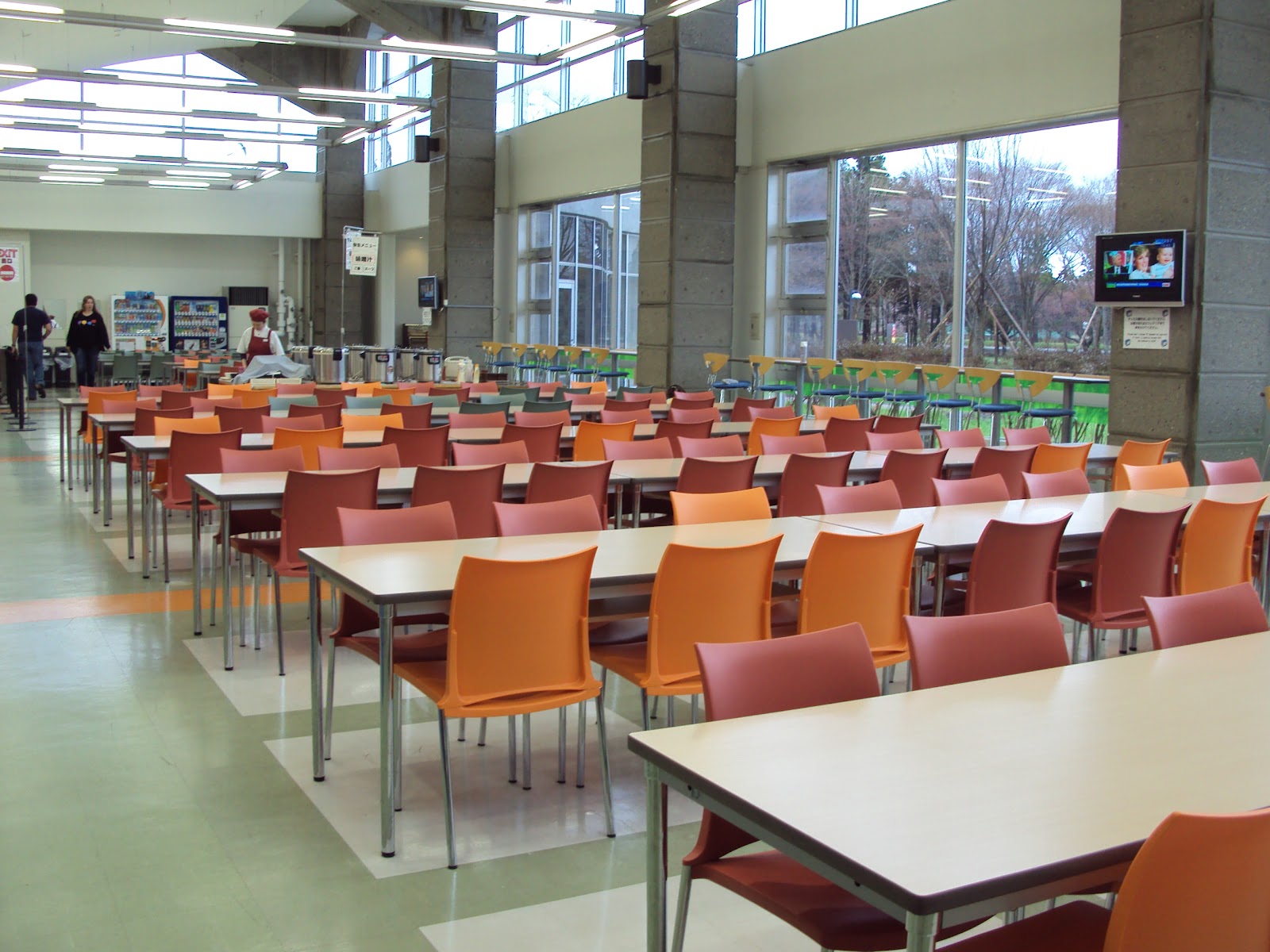
(The cafeteria where the whole freshman class and the exchange students would eat meals. Large windows allowed for delightful daydreaming on the rare chance you ate alone.)

(One, the AIU mascot. He is an Akita, the dog breed, and his name is a play on the Japanese sound for woof "wan", as well as the word 'one,' as in we are all part of one world.)


(Sakura, or cherry trees, lining one of the walkways on campus.)


(A video of the hip-hop dance club's recruiting skit. This was at an information session that told new students about the cool clubs they could join. I personally dallied in the calligraphy club, the tea ceremony club, and mainly the Japanese traditional dance club.)


Monday, May 21, 2012

The Highs and Lows of Being Somewhere Foreign

Although I have been traveling to far away places since I was 6 years old, for the most part I hadn't experienced anything extremely foreign. Most of my travel experience has been to either Alberta or California, with the occasional trip so somewhere new, like Hawaii, Arizona, British Columbia, and Mexico. Canada, while retaining an entirely different essence than the US, has never pushed my comfort zone so far as to feel “foreign.” My trips to Hawaii and Mexico were so tourist oriented, that the walls of my resort hotel or cruise ship kept me from really experiencing the uniqueness of those places. So when I went to Japan, the sensation of being in a truly foreign land, built up by a lifetime of dreaming, obsession, and hype, was intense.

The understanding that I was even going to Japan didn't really dawned on me until I was on the train traveling from Narita Airport to Tokyo Station. Looking out the window as we moved through the relatively uncrowded outskirts of Tokyo it finally hit me that I wasn't just going to Japan, I was there. And it was so different. The trees, roads and houses were crowded together with only loose whispers of order, making the careful city planning of Colorado cities seem obsessive-complusive. The roofs of the houses spread out passed the walls into the pointed corners so characteristic of East Asian architecture—giving even the cheapest, smallest house a traditional flair reminiscent of shrines and pagodas and samurai castles. The signs and billboards we passed were written in a language that, despite my years of learning it, I could not decipher in the brief moments they flew by. It was exactly as I had expected it to look, and yet everything was a surprise. I was bouncing in my seat, nose pressed against the glass like a child. Turning to my boyfriend, Justin, who was also studying abroad, I said, “I can't believe we're here.”

This excitement was enough, for a while, to counteract the fact that I had just flown across the Pacific Ocean on a cramped airplane and had managed very little sleep. It wasn't until we actually got to Tokyo Station—the biggest and most crowded train station in the world—that the other, scarier side of being in such a foreign place began to take its toll. My language courses had not prepped me for the plunge of being surrounded by people who only spoke Japanese. As my weariness sunk in, I suddenly could not remember anything I'd learned, and anybody who talked to me sounded like an alien under water. Not to mention that speaking Japanese to a native still made my palms sweat and my heart beat like a percussionist on crack.

Navigating Tokyo Station, even with the supposed “help” of my boyfriend's brother who lived in Tokyo, was a nightmare. For a small town girl who is used to cities of 3000 and can barely handle her university of 30,000, it was terrifying. People in Tokyo Station don't watch where they're going. They are focused on getting to their destination as fast as possible and they don't notice anything else—even two dumb foreigners with two huge suitcases each, standing in everyone's way looking completely lost. Some guy even intentionally tripped my luggage. Justin's brother adopted this hurried mindset, too, and completely forgot (or didn't care to find out) that I had no idea how to buy train tickets, or get through the check points, or where to go. When I tried to explain, I was rushed past the check point anyway, quickly told “It's okay. It's okay.” Luckily no one checked our tickets on the train we took to get to dinner, because I definitely did not buy one.

This was not going as I had hoped. Justin and I had traveled to Japan shortly after the big earthquake in March 2011. After a month of not knowing whether we could go at all, we finally got the green light a mere week before we were supposed to leave. Having to rush all our preparations in one week, we had no time to really understand what would happen once we got to Japan. All I knew was that we were going to eat with Justin's brother in Tokyo before getting on to a bus to take us north to Akita province. As such, when we got there we were completely clueless.

After my illegal train trip we found ourselves in Akihabara, where we were supposed to eat. In case you don't know, Akihabara is a neighborhood of Tokyo that specializes in the crazier side of Japan. It's full of shops that sell everything you could possibly obsess over—anime, electronics, video games and arcades, maid cafes, porn, candy, toys, karaoke, alcohol. All of this is advertised with signs of bright, glaring neon that hover over the densely crowded streets filled with every kind of person you can imagine. It's a place I've long wanted to visit, but after the confusion of Tokyo Station, its intensity was overwhelming. There was too much too look at, it was too bright, too crowded, I was tired and my feet hurt. Our luggage was heavy and cumbersome, and dragging it through such a crowded neighborhood was like trying to maneuver a semi through rush hour L.A. traffic.

When we finally reached our restaurant—which was supposed to be sukiyaki (my favorite Japanese dish)--Justin and I were cranky and exhausted, and more than a little hungry. The meal was certainly not sukiyaki, and was instead some overpriced assortment of tough cuts of beef, cooked over a table grill. The portions were inadequate, and yet they were so expensive I couldn't bear to order more.

Justin's brother and his wife were anxious to make the most of our brief time in Tokyo before we left for school, so we made a pathetic effort to go a neko cafe, or a cafe where you enjoy food with cats around. It sounded cute, but when we got there it was closed. Despite offers to try something else, Justin and I just wanted to go wait for our bus and sit down. So we did. With our butts cooling on a cement ridge around the sidewalk, we waited until our bus came and left without much ceremony. We would, after all, see them at the end of our trip.

The night bus was nice and quiet and dark, and I slept with my head in Justin's lap, despite my misgivings about public affection in Japan. (Cuddling and kissing in public in Japan is not as accepted as it is in the United States). I was tired, and at the moment I couldn't care less about what people thought of me using my boyfriend as a pillow.

When we arrived in Akita and at our school, Akita International University (AIU), some of the exhilaration began to return. The campus was beautiful, and the welcome committee was full of friendly, warm, energetic people. Exchange students from all around the world were chatting in groups, already making friends. We were shown our rooms, where the novelty of being in the dorms again brought back memories of my freshman year of college, when I first felt the delight of striking out on my own. I set up my futon rental in my bunk bed, crawled into it. Although I was not used to sleeping on a thin mattress on top of a wooden bed frame, I fell asleep instantly, ready and excited to take on the next day which would, hopefully, be much better than my first day in Japan.